Invited Speakers

Carsten Lutz
Leipzig University
https://home.uni-leipzig.de/clu/
The Logical Expressive Power of Graph Neural Networks
sponsored by EurAI
Abstract: Graph Neural Networks (GNNs) have emerged as one of the most prominent models for machine learning on graph-structured data. Over the past few years, significant effort has gone into characterizing their exact expressive power in terms of well-established formalisms such as various logical languages and the Weisfeiler-Leman graph isomorphism test. In this talk, I will present an overview of these developments, with particular emphasis on logics that are relevant for knowledge representation, including modal and description logics.
Slides
Short Biography: Carsten Lutz is Professor of Computer Science at Leipzig University. Previously, he was Professor of Computer Science at the University of Bremen. Carsten's research interests include various aspects of knowledge representation such as ontologies, description logics, existential rules, various forms of learning, and data management and querying. He recently also became interested in graph neural networks and their connection to logic and KR. Carsten is a EurAI fellow. He has won best paper awards at conferences such as KR, AAAI, IJCAI, PODS, and ICDT, and has received an ERC Consolidator Grant.
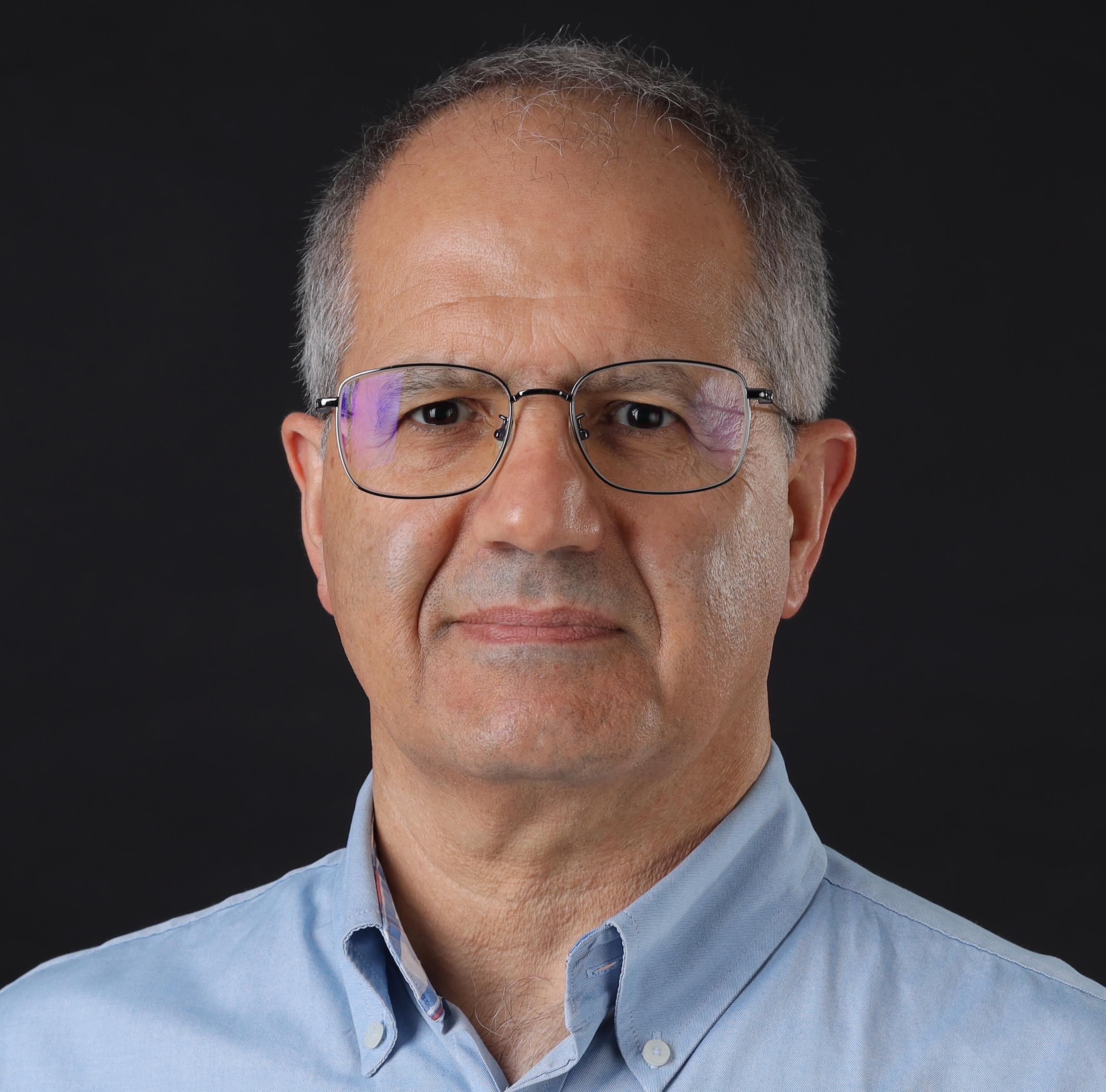
Joao Marques-Silva
ICREA (Catalan Institution for Research and Advanced Studies)
Rigorous Explainability by Feature Attribution: From SHAP to nuSHAP
Abstract: Explainable artificial intelligence (XAI) is marred by non-rigorous solutions; these foster distrust rather than building trust in deployed AI models. SHAP is one of the most widely used tools of XAI. SHAP targets explainability by feature attribution and uses game theory to assign relative importance to the features of a machine learning model. This talk overviews the theoretical shortcomings of SHAP, proves that SHAP's results can mislead human decision makers, and develops rigorous logic-based alternatives to SHAP. The talk presented at the KR'26 conference is one of two FLoC talks on logic-based XAI, the other will be presented at the SAT'26 conference.
Slides
Short Biography: Joao Marques-Silva is a Research Professor of ICREA (Catalan Institution for Research and Advanced Studies), being affiliated with the University of Lleida, Spain. Before joining ICREA, Joao Marques-Silva held senior academic appointments at CNRS in France, the University College Dublin in Ireland, the University of Southampton in the United Kingdom, and the University of Lisbon in Portugal. Dr. Marques-Silva was elected Fellow of the EurAI in 2023 and of the IEEE in 2016, and he received the 2009 CAV Award for fundamental contributions to the development of high-performance Boolean satisfiability solvers. His research interests comprise automated reasoning and its applications, including machine learning.

Magdalena Ortiz
TU Wien (Vienna University of Technology)
It's all Connected: Knowledge Representation for Graph Data
Abstract: The knowledge representation community has made great contributions to the foundations of correct and reliable data-centric intelligent systems. Well-known success stories include the adoption and consolidation of Description Logics (DLs) as ontology languages and as the formal backbone of the virtual knowledge graph paradigm. Indeed, DLs are a powerful and well-understood toolbox of decidable logics for describing and reasoning about graphs, precisely what we need today. Graph data is a cornerstone of modern information management, powering applications such as knowledge graphs, biomedical databases, social networks, and enterprise data integration. The two dominant paradigms—the Resource Description Framework (RDF), which underpins the Semantic Web and linked data ecosystems, and property graphs, widely adopted in systems such as Neo4j and Amazon Neptune—have both undergone major standardisation efforts in recent years, reopening old questions and raising new ones. On the property graph side, the recent emergence of GQL and SQL/PGQ as standard query languages resolves enduring obstacles to ontology-mediated graph querying and invites a fresh look at the long-standing FO rewritability barrier. On the RDF side, the rise of constraint languages such as SHACL reveals a rich landscape of novel reasoning problems, including validation, static analysis, and shape learning, which are intimately connected to description logics but demand revisiting basic assumptions about open- and closed-world reasoning, fixed-point semantics, and inconsistency tolerance. Both threads point toward the same conclusion: some of the most exciting questions around graph data in intelligent systems are, at their core, problems of knowledge representation, and as a community, we have a lot of work ahead of us if we are to ensure that reliable and accurate reasoning prevails in the modern AI landscape.
Slides
Short Biography: Magdalena Ortiz is a Full Professor at the Institute of Logic and Computation, Faculty of Informatics, TU Wien (Vienna University of Technology). Her research focuses on knowledge representation and reasoning, with a particular emphasis on description logics, ontology-based data access, and the logical foundations of artificial intelligence. She obtained her PhD from TU Wien after completing a European Master’s degree in Computational Logic, following undergraduate studies in Informatics in Mexico. She has received several awards for her research contributions and led several research projects. Her research group focuses on the logical foundations of languages for the intelligent and reliable handling of complex data, bridging logic, artificial intelligence, databases, and semantic systems.