Sixth International Conference on Principles of
|

|

|
Sixth International Conference on Principles of
|
|
|
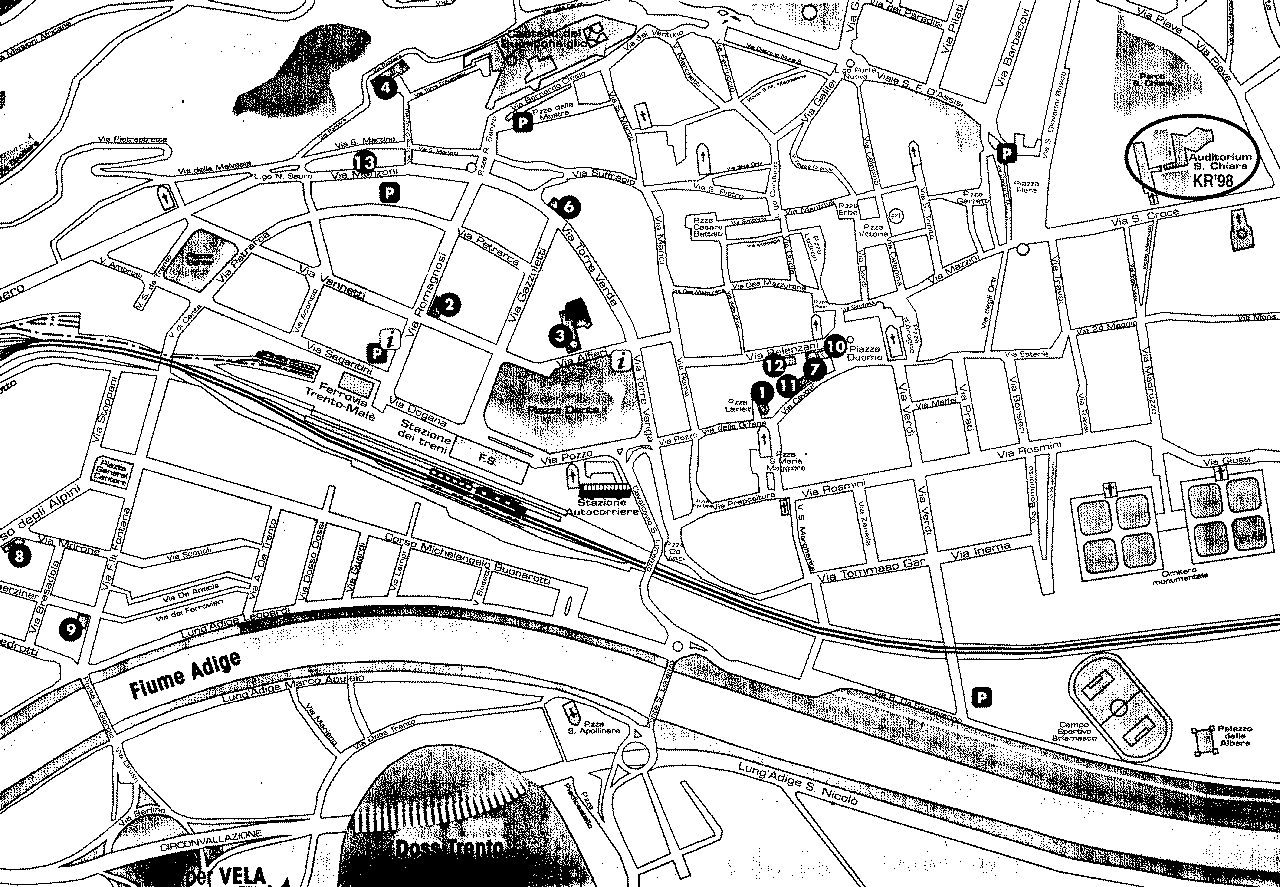
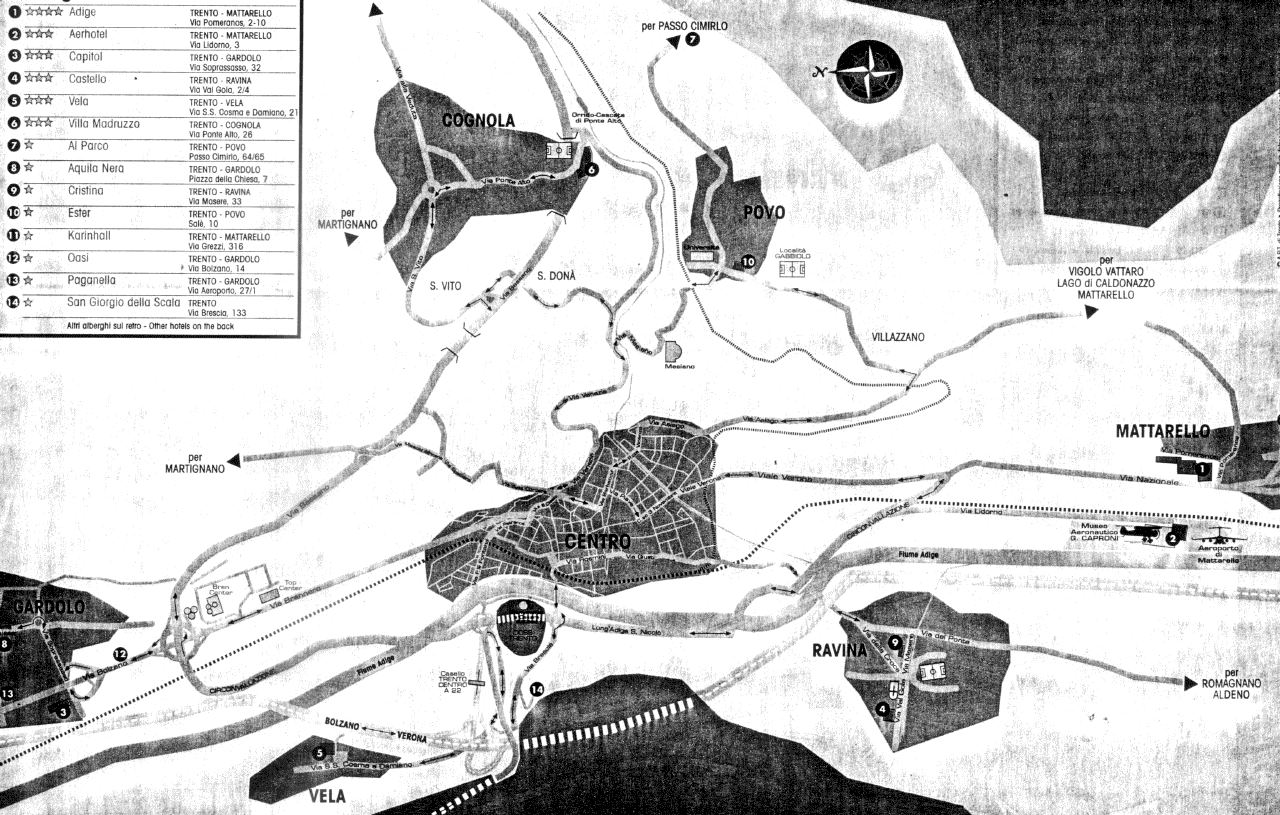
![[Trento]](trento.jpg) Trento (100.000
inhabitants), the capital of the Region of Trentino and Alto Adige
(Südtirol) and of the Province of
Trentino. Trento is situated 190 m. above the sea level on the
flat ground of the Adige river Valley on the
Verona-Brennero-Innsbruck-Munich motorway and railway.
Trento (100.000
inhabitants), the capital of the Region of Trentino and Alto Adige
(Südtirol) and of the Province of
Trentino. Trento is situated 190 m. above the sea level on the
flat ground of the Adige river Valley on the
Verona-Brennero-Innsbruck-Munich motorway and railway.
The town is surrounded by beautiful mountains (the southern part of the Alps and the Dolomites) and lakes (in particular lake Garda, known for its mild climate); it is dominated by the nearby Mounts Bondone (2,170 m.) and Paganella (2,125 m.). The high craggy limestone buttresses and spires of the Dolomites soar above the conifer forests and plains surrounding their foothills, and at dawn and dusk their pinkish rock becomes tinted pastel pink, red, and violet, a spectacular sight. The valleys, woodland, grassland, and small lakes between the peaks are magnificent, and are the reason why the Dolomite mountains are famous throughout the world: almost vertical walls, hundreds of metres high, such as the Sella, the south side of the Marmolada (3,342 m.), high sharp peaks like the Madonna Peak in the Pale di San Martino, and the needles and towering rock of the very famous Torri del Vaiolet and the equally renowned Campanile Basso di Brenta, the Catinaccio, all examples of the variety of forms and appearance of these mountains. The best-known and best-equipped resorts include Cortina d'Ampezzo, San Martino di Castrozza, Ortisei, Selva di Val Gardena, Canazei, Moena, and at the foot of the Brenta group of mountains, Madonna di Campiglio.
Trento was a roman town of some importance (Tridentum) and after Goth, Lombard and Carolingian rule it passed in year 1027 from Emperor Conrad the Salic to the Bishop Princes. Though established as a satellite state of the Germanic Empire, it always had a certain independence. The Council of Trento was held here from the year 1545 to year 1563 by the Catholic Church in an attempt to curb the rapid progress of Martin Luther's Reformation. The Bishop Princes rule lasted until year 1801. Monuments include the Duomo, built in 12th-13th Century and seat of the Council of Trento, and the Castello del Buon Consiglio, an imposing building dating to various periods (original nucleus 9th Century) seat of the Bishop Princes.
For any further information please refer to your Travel Agent or to KR'98 Secretariat.
 Go to KR Home
Page.
Go to KR Home
Page.
franconi@irst.itc.it Last modified: Tue May 26 06:46:09 EDT 1998